
Decision Ledger
Every decision. Owned,
recorded, traceable.
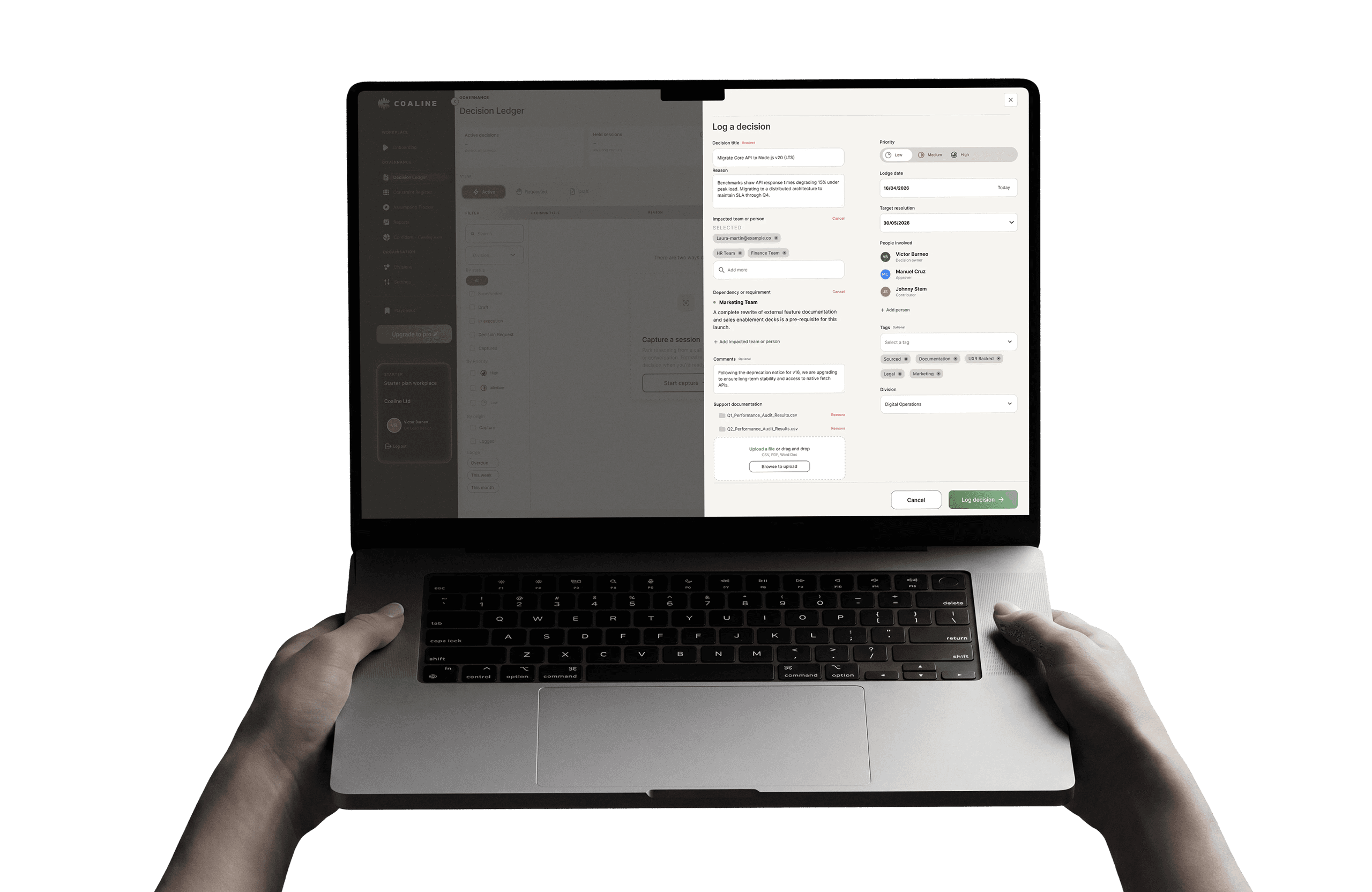
The Decision Ledger
is where your organization's calls live — not in Slack, not in someone's head, not in a meeting that no one took notes from. Every decision logged is structured, owned, and permanently part of your governance record.
The problem
it solves
Most organizations make hundreds of decisions a month. Almost none of them are recorded anywhere useful. Six months later, a new team member asks why a direction was taken. No one can answer. The person who made the call has moved on. The context is gone. The team relitigates a decision that was already made.
That's governance debt, and it compounds.
What the Decision Ledger does
Log decisions at the point they're made
A structured record with a clear title, full context, status, and named ownership. Not a note, a governance record.
Track revisions with no losing history
When a decision changes, the original is preserved. The revision chain shows what changed, why, and when, so you always have the full story.
Scope decisions to the right people
Decisions are scoped to divisions and projects. The right people see the right decisions, without everyone drowning in everything.
Connect decisions to execution
Link decisions to Jira tickets and tasks. When the work is done, resolve the decision. When it stalls, the record reflects it.

Decisions get made in a conversation, then gone when the thread dies.
Coaline remembers what Slack forgets.
The Decision Ledger tracks every decision through its full lifecycle
Draft → Decision Request → In Execution → Done → Superseded, so nothing lives only in someone's memory or a buried thread. Every decision carries its own reasoning: what was assumed, what was blocking, who owned the call, and what it superseded if anything changed.
When a team member leaves or a decision gets revisited six months later, the reasoning doesn't leave with them. It's structured data, not a conversation you have to go digging for.
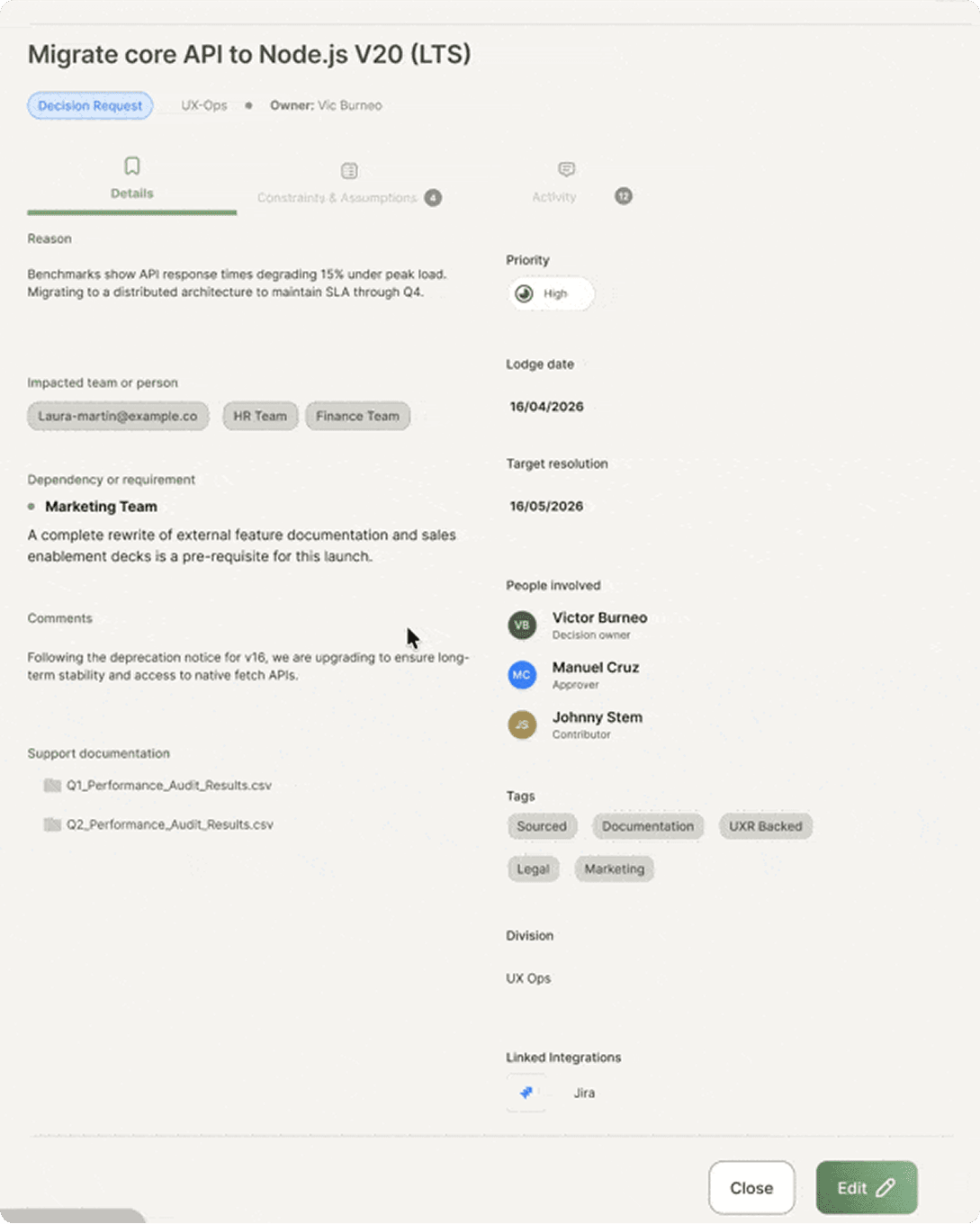

- Action-oriented decision titles enforced by convention
- Context field — situation, options considered, reasoning
- Three-level revision hierarchy — Lodged → Revised → Superseded
- Primary owner (mandatory) + up to two supporting owners
- Division and project scoping
- Status tracking — Lodged, Revised, Superseded, Resolved, Archived
- Full audit trail — every change recorded automatically
- Jira integration — bidirectional linking to issues and tickets

Who is it for?
For teams that make important calls every day, and need those calls to be visible, owned, and followed through. Without the overhead that usually comes with it.
Stop losing the reasoning behind your decisions.
No spam, unsubscribe anytime.